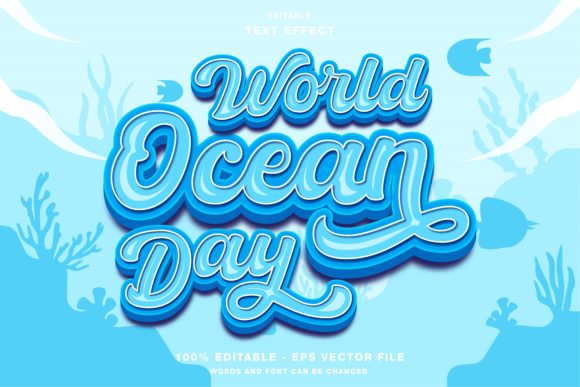
World Ocean Day Editable Text Effect
The ocean is more than a backdrop; it is the lifeblood of our planet, regulating climate, providing food, and inspiring awe. When June 8th arrives, marking World Ocean Day, brands, educators, and creators have a unique opportunity to amplify this message. However, standard stock imagery often fails to capture the dynamic, fluid nature of the sea. This is where the World Ocean Day - Editable Text Effect becomes an indispensable tool for modern designers. It bridges the gap between conceptual messaging and visual impact, allowing you to create typography that literally flows with the theme.
This resource is not just a static graphic; it is a fully customizable design asset built for Adobe Illustrator. Whether you are crafting a social media campaign for Instagram, designing a high-impact poster for a local beach cleanup, or laying out a magazine spread on marine conservation, this text effect provides the professional polish needed to stand out in a crowded digital landscape. By leveraging vector-based flexibility and RGB color modes, you can ensure your visuals remain crisp, vibrant, and perfectly aligned with your brand’s voice.
Why Vector Flexibility Matters in Campaign Design
In the fast-paced world of digital marketing and print production, adaptability is key. Many pre-made text effects are raster-based, meaning they pixelate when resized or are difficult to modify without losing quality. The World Ocean Day - Editable Text Effect solves this problem by providing source files in EPS format, alongside high-resolution JPG previews. Because the core elements are vector-based, you can scale your headline from a tiny Twitter profile banner to a massive event billboard without any loss in clarity.
The editable nature of this asset empowers creators to maintain consistency across multiple platforms. Imagine launching a coordinated campaign where your Instagram stories, Facebook headers, and printed flyers all share the same typographic style but feature different calls to action. With this tool, you simply swap out the text while retaining the intricate wave distortions, bubble accents, and fluid gradients. This level of customization ensures that your visual identity remains cohesive, reinforcing brand recognition while delivering a powerful environmental message.
Creative Applications Across Platforms
The versatility of this text effect allows it to transcend specific mediums. Here is how different professionals can leverage this asset to maximize their impact:
- Social Media Managers: Create eye-catching headlines for Instagram posts and Twitter threads. The RGB color mode ensures that the blues and teals of the ocean pop on backlit screens, driving higher engagement rates for awareness campaigns.
- Event Organizers: Design compelling posters and flyers for coastal cleanups, aquarium exhibitions, or educational seminars. The bold, fluid typography grabs attention from a distance, making it ideal for physical promotion.
- Educators and Publishers: Enhance school newsletters, magazines, or educational materials. The playful yet professional aesthetic makes complex topics about marine biology or conservation accessible and engaging for students and readers alike.
- Small Business Owners: If you run a surf shop, a seafood restaurant, or a travel agency, use this effect to create seasonal promotions that align with global observances, showing your commitment to sustainability.
Each of these use cases benefits from the ease of editing. You do not need advanced manipulation skills to change the text; the file is structured so that you can input your own copy and let the pre-built styles do the heavy lifting. This efficiency allows you to focus on the strategy behind your message rather than getting bogged down in technical design hurdles.
Designing for Impact: Color and Composition
When working with the World Ocean Day - Editable Text Effect, understanding color theory can elevate your design from good to exceptional. The file is set to RGB color mode, which is optimized for digital displays. This means the colors will appear vibrant and luminous on smartphones, tablets, and computer monitors. However, if you are adapting the design for print, such as flyers or magazines, keep in mind that you may need to convert specific elements to CMYK or check with your printer to ensure the deep ocean blues translate accurately to paper.
To keep your results clear and effective, consider the hierarchy of information. The text effect is designed to be a headline element. Use it for your primary message, such as "Protect Our Oceans" or "Dive Into Conservation." Keep supporting text simple and legible, using a clean sans-serif font that contrasts well with the ornate, fluid style of the main effect. This balance prevents visual clutter and ensures your audience can quickly grasp the core message.
Furthermore, think about the background. Since the text effect likely incorporates transparent or semi-transparent elements to mimic water, place it over backgrounds that complement rather than compete with it. A solid dark blue, a gradient of teal to sand, or a subtle underwater photograph can provide the perfect canvas. Avoid busy patterns that might obscure the details of the text effect, ensuring your headline remains the focal point.
Tailoring the Message to Your Audience
One of the greatest strengths of this editable resource is its ability to be tailored to diverse audiences. A nonprofit focused on policy change might use a bold, serious variation of the text effect to convey urgency, pairing it with stark statistics. In contrast, a family-friendly aquarium might use the same tool to create a whimsical, inviting headline for a summer exhibit, emphasizing wonder and exploration.
For freelancers and agencies, this adaptability translates to better client service. You can present multiple variations of a concept quickly, adjusting the tone and wording to suit different stakeholder preferences. This rapid prototyping capability not only saves time but also demonstrates your ability to deliver polished, professional work under tight deadlines. By offering a range of creative directions using the same foundational asset, you provide value through both efficiency and artistic versatility.
Practical Tips for Customization
To get the most out of the World Ocean Day - Editable Text Effect, follow these practical steps during your workflow:
- Organize Your Layers: Before making changes, familiarize yourself with the layer structure in Illustrator. Keeping your edits organized ensures that you can easily revert changes if needed and maintains the integrity of the original effect.
- Experiment with Typography: While the effect is pre-styled, try different font weights or lengths of text to see how the distortion reacts. Short, punchy phrases often work best, but longer sentences can be impactful if spaced correctly.
- Check Contrast: Always preview your design in grayscale to ensure there is sufficient contrast between the text and the background. This accessibility check ensures your message is readable for all users, including those with visual impairments.
- Export Correctly: For web use, export as PNG or JPG at 72 DPI. For print, ensure you are exporting at 300 DPI and verify color profiles with your print provider. Having both EPS and JPG files in the main folder gives you the flexibility to choose the right format for each channel.
By approaching this tool with a strategic mindset, you transform a simple graphic asset into a powerful communication device. The World Ocean Day - Editable Text Effect is more than just a design shortcut; it is a catalyst for creativity, enabling you to produce high-quality, meaningful content that resonates with audiences across the globe. Whether you are advocating for marine protection or celebrating the beauty of the sea, this resource helps you tell your story with clarity, style, and purpose.