Maximizing Brand Visibility with Professional Furniture Social Media Post Templates
In the highly visual and competitive landscape of interior design and home decor, the ability to capture attention quickly is paramount. For furniture retailers, independent carpenters, and interior design firms, social media platforms serve as the primary showroom for potential clients. However, maintaining a consistent and high-quality digital presence requires more than just taking photos of products; it demands strategic graphic design. This is where a professionally crafted Furniture Social Media Post template becomes an invaluable asset. By leveraging editable vector designs, businesses can streamline their content creation process while ensuring every post reflects a premium brand identity.
The Strategic Value of Vector-Based Design Assets
When evaluating digital marketing tools, the format of the design file is often overlooked, yet it is critical for long-term usability. A template provided in Adobe Illustrator formats—such as AI, EPS, and SVG—offers distinct advantages over standard raster images like JPEGs or flattened PNGs. Vector graphics are resolution-independent, meaning they can be scaled to any size without losing clarity. This is essential for furniture brands that may need to adapt a single design concept for various platforms, from small Instagram stories to large-format Facebook cover photos or even printed brochures.
The inclusion of multiple file formats, including PDF and high-resolution PNGs, ensures compatibility across different software ecosystems. While Adobe Illustrator CC is the industry standard for editing these files, the availability of PDF and PNG versions allows users with limited design software to still utilize the core layout effectively. Furthermore, the specification of 300 DPI (dots per inch) in RGB color mode guarantees that the visuals appear crisp and vibrant on digital screens, which is the primary medium for social media engagement. This technical foundation supports a professional aesthetic that builds trust with consumers who associate high-quality visuals with high-quality craftsmanship.
Customization and Brand Consistency
One of the most significant challenges for small to medium-sized furniture businesses is maintaining brand consistency without the budget for a full-time graphic designer. A customizable template addresses this gap by providing a structured framework that is easy to edit. Since all elements and fonts are editable, business owners can swap out placeholder text, adjust color schemes to match their seasonal collections, and insert their own product photography seamlessly.
The use of free fonts in these templates is a thoughtful feature that removes licensing barriers. Users do not need to purchase expensive typefaces to achieve a polished look. Instead, they can focus on the content of their message. Whether promoting a summer sale, launching a new eco-friendly line, or sharing customer testimonials, the underlying structure remains consistent. This repetition helps in building brand recognition. When followers see a familiar layout and typography style, they instantly associate the post with the brand, reinforcing brand recall in a crowded feed.
Enhancing Workflow Efficiency for Content Creators
Time management is a crucial factor for social media managers and business owners. Creating unique designs from scratch for every post is time-consuming and often leads to burnout or inconsistent posting schedules. By utilizing a pre-designed Furniture Social Media Post template, creators can significantly reduce the time spent on the technical aspects of design. The workflow shifts from creation to adaptation. Instead of worrying about alignment, font pairing, and color theory, the user can focus on selecting the best product images and writing compelling captions.
This efficiency allows for a more agile marketing strategy. For instance, if a furniture store receives a sudden shipment of vintage chairs, they can quickly update the template with new photos and publish a post within minutes. This speed is vital for capitalizing on trends and engaging with audiences in real-time. Additionally, having a library of such templates enables businesses to plan their content calendar weeks in advance, ensuring a steady stream of professional-looking posts that keep the audience engaged.
Visual Hierarchy and Consumer Psychology
Effective social media design is not just about aesthetics; it is about guiding the viewer’s eye through a logical visual hierarchy. Professional templates are designed with an understanding of consumer psychology. They strategically place key information—such as headlines, prices, or call-to-action buttons—in areas that naturally draw attention. For furniture posts, this often means highlighting the product image while keeping textual information concise and readable.
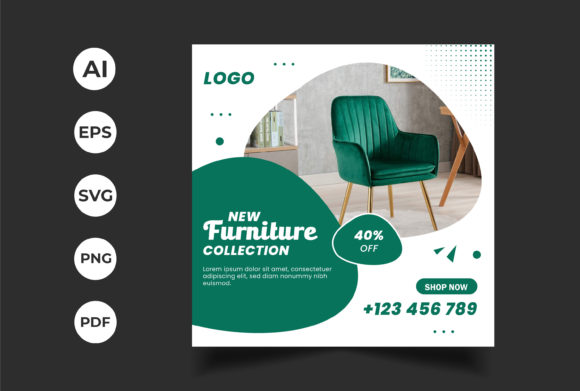
The clean, uncluttered layout typical of these vector templates ensures that the furniture itself remains the focal point. In the furniture industry, the texture, color, and form of the product are the primary selling points. A busy or poorly designed background can distract from these details. By using a template with ample white space and balanced composition, businesses allow their products to shine. This approach respects the intelligence of the consumer, providing them with clear information without overwhelming them, which can lead to higher engagement rates and increased click-throughs to product pages.
Versatility Across Different Business Models
The utility of a generic yet professional template extends beyond large retail chains. It is equally beneficial for various stakeholders in the furniture ecosystem. Independent artisans and custom woodworkers can use these designs to showcase their bespoke pieces, adding a layer of professionalism that might otherwise be missing from their DIY marketing efforts. Interior designers can utilize the templates to share mood boards or before-and-after transformations, maintaining a cohesive portfolio on social media.
Moreover, educators and researchers in the field of design and marketing can use these templates as case studies to demonstrate the impact of visual consistency on brand perception. Hobbyists who run small side businesses selling upcycled furniture can also benefit from the ease of use, allowing them to compete visually with larger entities. The adaptability of the template means it can be tailored to suit the specific tone of any brand, whether it is minimalist and modern, rustic and warm, or luxurious and ornate.
Technical Considerations for Optimal Results
To fully leverage the benefits of these templates, users must pay attention to certain technical details. Although the templates come with free fonts and editable elements, the quality of the final output depends heavily on the images used. Since images are not included in the download, selecting high-resolution, well-lit photographs is crucial. Blurry or poorly lit photos will undermine the professional quality of the vector design. It is recommended to use images that are optimized for web use but retain enough detail to look sharp on high-density displays.
Additionally, understanding the difference between RGB and CMYK color modes is important. Social media platforms operate in RGB, so the template’s default setting is appropriate for digital use. However, if a business decides to print these designs for in-store promotions or flyers, they may need to convert the colors to CMYK to ensure accurate color reproduction. The vector nature of the files makes this conversion straightforward, preserving the integrity of the design across both digital and physical mediums.
Conclusion
In conclusion, investing in a high-quality, editable Furniture Social Media Post template is a strategic move for any business looking to enhance its online presence. The combination of vector flexibility, ease of customization, and professional design principles provides a solid foundation for effective digital marketing. By streamlining the design process and ensuring visual consistency, businesses can focus more on engaging with their audience and less on the mechanics of graphic design. As the digital landscape continues to evolve, having adaptable and professional visual assets will remain a key differentiator for successful furniture brands.