Integrating Clipart Watercolor Mermaid, Sea Hourse Assets into Professional Design Workflows
In the modern digital landscape, visual consistency is not merely an aesthetic preference; it is a functional requirement for brand recognition and user engagement. For designers, educators, and content creators, sourcing high-quality graphical elements that blend seamlessly with existing projects can often become a bottleneck. This is where specialized asset packs, such as those featuring Clipart Watercolor Mermaid, Sea Hourse designs, play a critical role in streamlining the creative process. These assets are not just decorative images; they are functional components that, when integrated correctly, enhance the efficiency and quality of various design outputs.
Understanding how to effectively utilize these watercolor elements requires a shift in perspective. Instead of viewing them as standalone pictures, consider them as modular building blocks within a larger workflow. Whether you are developing a children’s educational module, designing wedding invitations, or creating social media content for a lifestyle brand, the integration of hand-drawn, transparent-background PNGs allows for rapid prototyping and polished final products. The key lies in preparation, compatibility, and strategic placement.
The Strategic Value of High-Resolution Transparent Assets
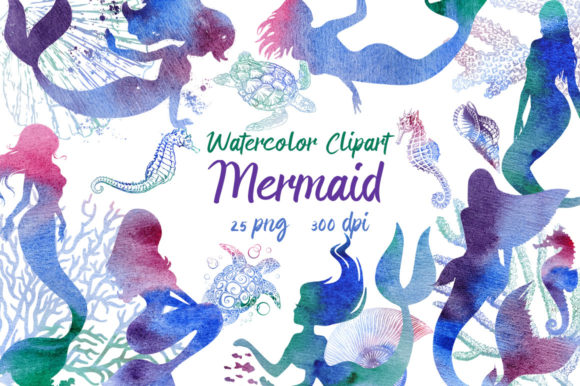
When evaluating digital assets for professional use, technical specifications are paramount. The Clipart Watercolor Mermaid, Sea Hourse collection offers files at 300 dpi in RGB format, with approximate dimensions of 10×10 inches. This specification is crucial for two primary reasons: print readiness and digital flexibility.
For professionals involved in physical product creation, such as scrapbooking, decoupage, or printing on merchandise, 300 dpi ensures that the watercolor textures retain their soft, organic edges without pixelation. Low-resolution images often result in jagged lines and blurred details, which can undermine the perceived quality of the final product. By starting with high-resolution source files, you future-proof your designs, allowing for scaling and adaptation across different mediums without loss of fidelity.
Furthermore, the transparent background inherent in PNG formats eliminates the time-consuming task of manual masking or background removal. In a fast-paced workflow, the ability to drag and drop a Clipart Watercolor Mermaid, Sea Hourse element directly onto a canvas, layer it over text, or combine it with other graphics like shells, turtles, and coral, significantly reduces production time. This efficiency is particularly valuable for freelancers and small business owners who must balance creative execution with administrative responsibilities.
Workflow Integration: From Concept to Final Output
Integrating these watercolor elements into your projects involves a systematic approach that spans planning, execution, and quality control. Below is a breakdown of how these assets fit into various stages of the design lifecycle.
Phase 1: Preparation and Organization
Before beginning any design task, organization is essential. Upon downloading the 25 individual clipart elements, establish a dedicated folder structure on your local drive or cloud storage. Categorize the files by type—mermaids, sea horses, shells, turtles, and coral—to facilitate quick retrieval. This preliminary step prevents workflow interruptions later in the process when you are in a state of creative flow.
It is also advisable to review the color palette of the watercolor elements. Watercolor art typically features soft, blended hues. Understanding the dominant colors in your Clipart Watercolor Mermaid, Sea Hourse assets allows you to plan complementary background colors and typography choices. This foresight ensures visual harmony and reduces the need for extensive color correction during the design phase.
Phase 2: Implementation in Digital Projects
For digital applications, such as blog headers, web banners, or social media posts, the RGB color space of these PNGs is ideal. When incorporating these elements into web design, consider the following practical tips:
- Layering and Depth: Use the transparency to create depth. Place a Clipart Watercolor Mermaid, Sea Hourse image partially behind text boxes or other graphical elements to create a cohesive, layered look. This technique adds visual interest without compromising readability.
- Consistency Across Platforms: If you are managing a brand identity, use the same set of watercolor elements across different platforms. For instance, the same sea horse graphic used in an Instagram post can be repurposed for a newsletter header, reinforcing brand recognition.
- File Optimization: While the source files are 300 dpi, web performance requires optimized file sizes. Export your final designs in appropriate web formats (such as WebP or compressed PNG) to ensure fast loading times without sacrificing visual quality.
Phase 3: Application in Print and Physical Products
The versatility of these assets extends beyond the screen. For entrepreneurs and hobbyists involved in printing, the high resolution and transparent backgrounds offer significant advantages. Whether you are creating invitation cards, logos, or photo overlays for physical scrapbooks, the process remains consistent but requires attention to print-specific details.
When preparing files for print, ensure that your design software is set to the correct color profile. Although the source files are RGB, many professional printers prefer CMYK. Convert your final design layout accordingly, but keep the original RGB PNGs as your master assets to preserve color vibrancy during the editing process. The soft edges of the watercolor style blend naturally with paper textures, making them ideal for decoupage and papercraft creations where a harsh, digital look would be out of place.
Enhancing Creativity Through Combinatorial Design
One of the most powerful aspects of this 25-element pack is the ability to combine different components to create unique compositions. The inclusion of not just mermaids and sea horses, but also shells, turtles, and coral, allows for the construction of complex scenes from simple parts. This combinatorial approach encourages creativity and reduces reliance on single, static images.
For example, an educator creating a marine biology worksheet might combine a turtle clipart with coral elements to build a habitat scene. A wedding planner might pair a mermaid illustration with delicate shell accents to design a themed invitation suite. By mixing and matching these elements, you can generate hundreds of unique variations from a single purchase, maximizing the return on investment.
This method also supports iterative design. If a client requests changes to a layout, you can easily swap out individual elements—replacing a sea horse with a turtle, for instance—without having to redesign the entire composition. This flexibility is invaluable in client-facing roles where feedback loops are common.
Quality Control and Long-Term Usability
Maintaining a high standard of output requires regular quality control checks. When using Clipart Watercolor Mermaid, Sea Hourse assets, periodically review your designs on different devices and under various lighting conditions. Ensure that the watercolor textures appear smooth and that the transparent backgrounds have not introduced any unwanted artifacts or halos.
Additionally, consider the long-term usability of these assets. Store the original PNG files in a secure, backed-up location. As design trends evolve, watercolor aesthetics remain a timeless choice for themes related to nature, fantasy, and elegance. By maintaining an organized library of these resources, you build a personal asset bank that can be drawn upon for future projects, reducing the time spent searching for new graphics.
In conclusion, the effective use of Clipart Watercolor Mermaid, Sea Hourse elements is not just about adding decoration; it is about enhancing workflow efficiency, ensuring technical quality, and enabling creative flexibility. By understanding the technical specifications, organizing your resources, and integrating these assets strategically into both digital and print workflows, you can elevate the quality of your designs while minimizing production time. Whether you are a seasoned professional or a passionate hobbyist, these tools provide the foundation for creating visually compelling and professionally polished results.